
 by admin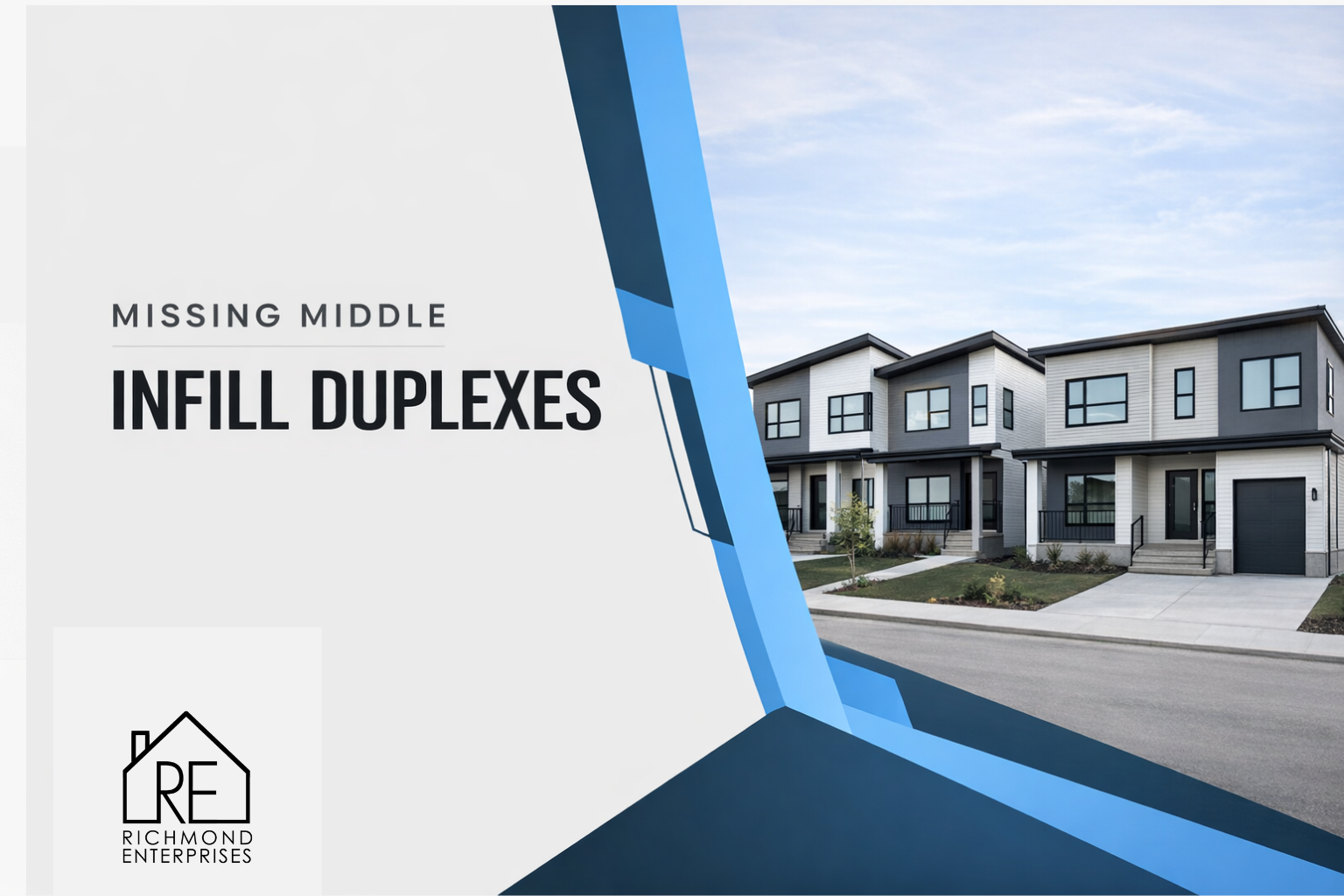
Residential real estate investors across Canada are adjusting their strategies. Rising construction costs, affordability pressure, and tighter financing have made large projects riskier and single-family rentals less predictable.
In the middle of these shifts sits a housing type that has been overlooked for decades but is now gaining serious attention: the infill duplex.
Often referred to as part of the “missing middle,” duplexes are increasingly viewed as one of the most stable and practical residential investments in Regina heading into 2026.
Why Housing Investors Are Rethinking Scale
Canada’s housing market has changed structurally, not temporarily. Construction costs have increased faster than general inflation, while wage growth has not kept pace with home prices. This gap has reduced homeownership affordability and strengthened long-term rental demand.
At the same time, many investors are finding that:
- Single-family rentals concentrate too much risk in one unit
- Large apartment projects require more capital, debt, and regulatory exposure
- Condos introduce unpredictable fees and governance issues
This has pushed investors toward smaller, efficient multi-unit housing that balances risk, cost control, and demand.
What the “Missing Middle” Actually Means
The “missing middle” refers to housing types that sit between single-detached homes and large apartment buildings. These include duplexes, triplexes, and fourplexes.
In many Canadian cities, zoning and development patterns over the last 50 years favored either low-density housing or high-density towers. Smaller multi-unit homes were underbuilt, creating a supply gap that still exists today.
That gap matters because missing middle housing:
- Is more affordable to build and rent
- Fits naturally into existing neighbourhoods
- Supports gradual density without large infrastructure costs
Duplexes are often the most accessible entry point within this category.
Why Regina Is Well Positioned for Infill Duplex Development
Regina has several structural advantages that make infill duplexes particularly attractive.
The city has stable population growth, consistent rental demand, and established neighbourhoods with existing infrastructure. Unlike major metro areas, land acquisition costs remain manageable, allowing infill projects to pencil out without extreme rent assumptions.
Municipal planning priorities are also shifting toward better land efficiency. While regulations still require careful navigation, there is growing recognition that moderate density is essential for long-term housing supply.
For investors, this means duplexes are not speculative. They align with how the city is expected to grow.
Duplexes Compared to Other Residential Investments
From an investment standpoint, duplexes sit in a balanced position.
Single-family rentals are simple but expose owners to full vacancy risk. Condos may appear affordable but often suffer from rising fees and limited control. Larger multi-unit buildings can deliver scale but require higher capital, more debt, and professional management.
Duplexes reduce vacancy risk by spreading income across two units while remaining manageable for individual investors. They also offer flexibility. Owners can live in one unit, rent both, or sell as a rental asset depending on market conditions.
This flexibility is a key reason duplexes perform well during uncertain economic periods.
Why Duplexes Perform Well in the 2026 Market Environment
Looking toward 2026, several conditions support continued strength in duplex investments.
Homeownership affordability is expected to remain constrained, even if interest rates stabilize. This supports long-term rental demand. At the same time, new rental supply in established neighbourhoods remains limited, especially for modern, energy-efficient units.
Duplexes also align well with changing tenant preferences. Renters increasingly value newer construction, efficient layouts, and lower operating costs, all of which are easier to deliver in purpose-built infill projects.
Rather than relying on rapid appreciation, duplexes perform through durability and steady demand.
The Value of Infill Location
Infill development matters as much as the building itself.
Duplexes built in established areas benefit from proximity to schools, services, transit, and employment. These locations tend to hold value better over time and experience more consistent rental demand.
From a long-term perspective, infill properties also offer stronger exit options. They can remain rentals, be sold to owner-occupiers, or be repositioned as market conditions evolve.
Location flexibility is a form of risk management.
Cost Control and Design Efficiency
Investment performance depends heavily on execution.
Duplex construction benefits from shared structural elements, which can reduce per-unit construction and energy costs. However, poor design or incomplete planning can quickly erode these advantages.
Early budgeting, efficient layouts, and coordinated design-build execution are essential. This is especially true for infill projects, where site conditions and municipal requirements can introduce complexity.
Well-planned duplexes protect margins. Poorly planned ones magnify risk.
Regulatory and Planning Reality
Infill duplex projects require more upfront planning than greenfield developments. Zoning, servicing, and permitting must be addressed carefully and early in the process.
While this adds complexity, it also creates a barrier that limits oversupply. Investors who work with experienced local builders are better positioned to navigate these requirements efficiently and avoid costly delays.
Professional execution is not optional in infill development.
Why New-Build Duplexes Outperform Older Housing Stock
Older rental properties often appear cheaper upfront but come with deferred maintenance, energy inefficiency, and unpredictable capital expenses.
New-build duplexes offer:
- Lower maintenance in early years
- Better energy performance and operating costs
- Layouts that match current tenant expectations
- Compliance with modern building standards
For investors planning to hold long term, reduced capital expenditure is just as important as initial yield.
Duplexes as a Scalable Investment Strategy
For many investors, duplexes serve as a gateway into multi-unit residential investment.
They are easier to finance than larger projects, simpler to manage, and provide experience that translates directly into future fourplex or small multi-unit developments.
This makes duplexes not just an investment, but a strategic foundation.
Why Infill Duplexes Align With Regina’s Housing Future
The demand for missing middle housing is structural. Regina’s market fundamentals support gradual density, rental stability, and efficient land use.
Infill duplexes meet these needs without relying on speculation or aggressive assumptions. When designed and built correctly, they balance cost control, resilience, and long-term value.
The strongest investments are not always the largest. They are the ones built for how people actually live and how cities actually grow.
FAQ Section
What is missing middle housing in Canada?
Missing middle housing refers to small multi-unit homes like duplexes and fourplexes that sit between single-family houses and large apartment buildings. These housing types have been underbuilt in many Canadian cities.
Are duplexes a good real estate investment in Regina?
Yes. Duplexes offer stable rental demand, lower vacancy risk than single-family rentals, and require less capital than large multi-unit buildings, making them well suited to Regina’s market.
Why is infill development important for Regina’s housing market?
Infill development uses existing infrastructure and established neighbourhoods to increase housing supply efficiently, which supports long-term affordability and sustainable city growth.
Is it better to build a new duplex or buy an older one?
New-build duplexes typically have lower maintenance costs, better energy efficiency, and fewer unexpected repairs, which can improve long-term cash flow and reduce risk.
Will demand for duplex rentals continue in 2026?
Yes. Ongoing affordability challenges and limited new rental supply are expected to support strong demand for well-designed duplex rentals in Regina through 2026 and beyond.