
 by admin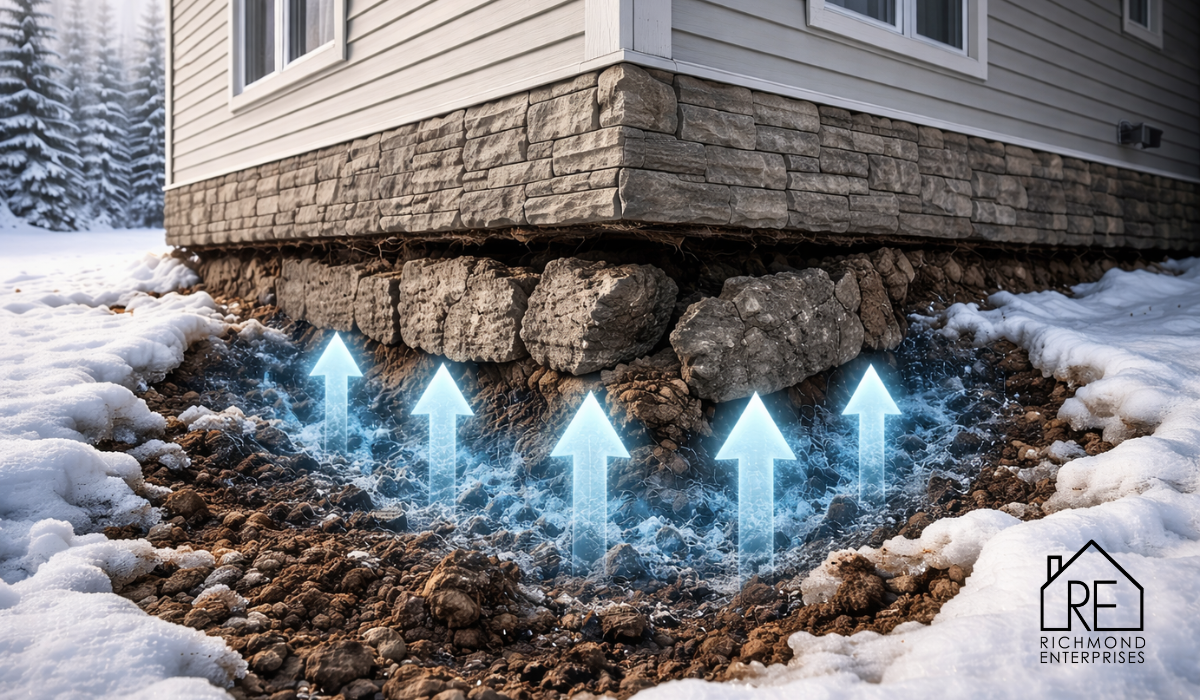
In Saskatchewan’s cold climate, frost heave is a serious concern for homeowners and builders alike. This natural process occurs when moisture in the soil freezes and expands, pushing the foundation upward. Understanding frost heave is essential to avoiding costly foundation damage.
What is Frost Heave?
Frost heave happens when water in the ground freezes and expands, exerting pressure on foundations. This is common in frost-susceptible soils, especially clay, which holds moisture. When the soil freezes, it creates ice lenses that push the foundation up, leading to cracks and uneven settlement.
Why Frost Heave Causes Foundation Damage
Frost heave can affect different foundation types:
- Slab Foundations: Can lift and crack under pressure.
- Crawlspace Foundations: Walls may shift, leading to instability.
- Basement Foundations: Walls can bow, leading to cracks and water leakage.
How Saskatchewan’s Climate Contributes
Saskatchewan’s harsh winters and deep freeze depths make frost heave particularly problematic. The soil freezes deeply, while snow accumulation retains moisture, further contributing to heave. Freeze-thaw cycles (when snow melts and refreezes) add additional strain on foundations.
Preventing Frost Heave: Key Solutions
Deep Foundations: Go below the frost line (1.5–2 meters) to avoid freeze penetration.
Frost-Protected Shallow Foundations (FPSF): Use insulation to prevent the ground from freezing beneath the structure.
Proper Drainage: Ensure water doesn’t accumulate around your foundation by grading and installing French drains.
Soil Treatment: Use non-frost-susceptible soils or soil additives to minimize frost heave potential.
Repairing Frost Heave Damage
If frost heave has already damaged your foundation, act quickly:
Assess damage: Look for cracks or uneven floors.
Stabilize foundation: Use hydraulic jacks or other methods to level the foundation.
Reinforce structure: Add steel piers or wall supports for added stability.
How to Prevent Frost Heave in Your Home
To protect your foundation:
Work with professionals who understand frost heave prevention.
Use proper foundations: Consider deep or frost-protected shallow foundations.
Manage moisture with proper drainage and grading to keep water away from the foundation.
Conclusion
Frost heave is a significant issue in Saskatchewan due to the harsh winters, but with the right construction techniques and preventative measures, it’s possible to avoid costly repairs. Understanding the problem and taking steps to prevent it during construction can protect your home from damage caused by frost heave.
FAQs: Frost Heave and Foundation Issues
What is frost heave and why does it happen?
Frost heave occurs when water in the soil freezes and expands, pushing the foundation upward. It typically happens in frost-susceptible soils, such as clay, when temperatures drop below freezing and cause moisture to freeze and exert pressure on the foundation.
How can I tell if my foundation is affected by frost heave?
Signs of frost heave include cracks in walls or floors, uneven floors, or misaligned doors and windows. These are indicators that the foundation may have shifted due to the pressure from freezing soil.
What type of foundation is most susceptible to frost heave?
Slab foundations are most vulnerable to frost heave because the concrete is in direct contact with the ground. However, crawlspace and basement foundations can also be affected if the soil underneath is susceptible to freezing.
How deep does the frost line go in Saskatchewan?
In Saskatchewan, the frost line typically reaches 1.5 to 2 meters deep, meaning the soil freezes at these depths during winter. Foundations need to extend below this depth to avoid frost heave.
Can frost heave be prevented during construction?
Yes, frost heave can be prevented with proper construction methods. Using deep foundations, frost-protected shallow foundations (FPSF), and good drainage systems are key strategies to protect your foundation from frost heave.
How much does it cost to repair frost heave damage?
Repair costs for frost heave damage can vary depending on the severity of the issue. On average, foundation leveling or stabilization can cost anywhere from $5,000 to $15,000, while more severe repairs, like replacing cracked foundations, can cost significantly more.