
 by admin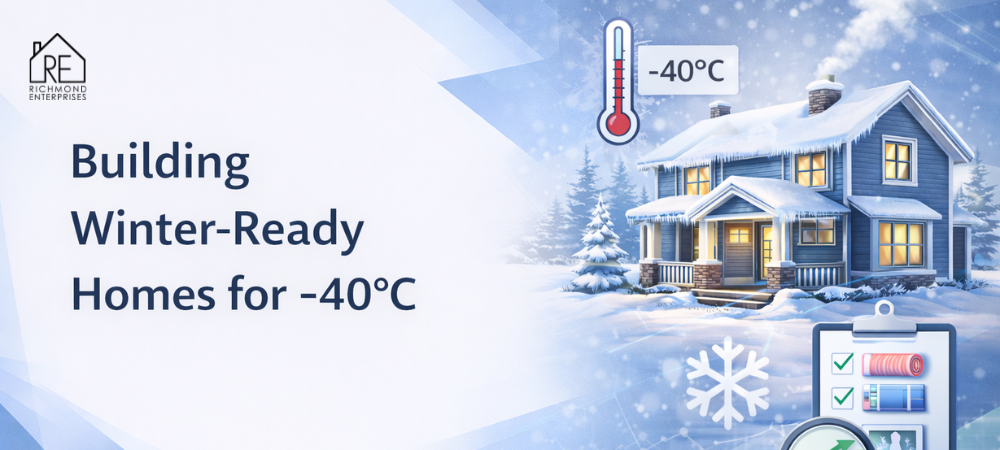
Building a home that can withstand the harsh winter conditions of the Canadian Prairies is no small feat. With temperatures regularly dropping to −40°C and beyond, designing homes that are not only comfortable but also energy-efficient and durable is critical.
For homeowners in Regina and throughout Saskatchewan, creating a winter-ready home is an investment that pays off in both comfort and energy savings.
At Richmond Enterprises, we specialize in designing and building homes that are built to last, no matter how cold it gets.
In this guide, we’ll walk you through the key considerations for building homes that can handle extreme cold, from insulation to ventilation and heating systems, ensuring your home stays warm and energy-efficient even in the most frigid conditions.
Understanding Extreme Cold on the Prairies
The Prairie climate is known for its brutally cold winters, where temperatures can regularly dip to −40°C and colder. These conditions demand homes that can efficiently manage heat, protect against moisture, and remain structurally sound despite freezing temperatures.
The National Building Code of Canada (NBC) provides clear guidelines on how homes should be constructed to handle such extreme climates, and Saskatchewan follows these codes closely to ensure buildings are both safe and comfortable.
In regions like Regina, homes need to be designed to prevent heat loss, reduce moisture buildup, and handle the mechanical demands that come with such extreme cold. Ensuring your home is winter-ready means using building practices and materials that exceed standard requirements to provide comfort and longevity.
Cold-Climate Building Codes and Standards
Building a home that can withstand extreme cold isn’t just about adding extra insulation; it’s about understanding how to construct a home that stays warm, dry, and efficient. The National Energy Code for Buildings (NECB) and local building codes ensure homes are designed to meet energy efficiency standards, which are crucial for surviving Regina’s cold winters.
At Richmond Enterprises, we follow these building codes to guarantee that your home meets all necessary standards for insulation, airtightness, and energy efficiency. We focus on creating homes that offer maximum insulation without compromising on aesthetics or comfort.
Building Envelope Essentials
The building envelope, essentially the physical barrier that separates your home from the outdoors, is a crucial element when it comes to cold-climate construction. The building envelope includes the walls, roof, foundation, and windows, and it plays a central role in maintaining thermal comfort and energy efficiency.
In extreme cold climates like Saskatchewan, homes need extra insulation and a tight building envelope to prevent heat from escaping and cold from entering. Here are a few of the key components of a well-insulated envelope:
Insulation: Insulating walls to an R‑value of 22 or higher, and ensuring attics are insulated to R‑52 or more, is crucial in retaining heat and minimizing energy consumption. Proper foundation insulation is also necessary to prevent heat loss through the basement and foundation walls.
Airtight Construction: Minimizing air leakage is just as important as insulation. The tighter your home is sealed, the less warm air will escape. This means using high-quality sealants around windows, doors, and other openings.
Thermal Bridges: Thermal bridging happens when materials like studs or steel beams allow heat to escape through them. At Richmond Enterprises, we focus on methods that minimize thermal bridging, using modern framing techniques and better insulation methods to ensure a consistent indoor temperature.
When combined, these features reduce the strain on your heating systems and improve your overall energy efficiency.
Ventilation, Indoor Air Quality, and Heat Recovery
In a highly airtight home, ventilation becomes even more important. Homes designed for extreme cold climates tend to trap moisture and pollutants, which can negatively affect indoor air quality.
This is where Mechanical Ventilation with Heat Recovery (HRV) systems come in. These systems circulate air while recovering heat from the exhaust air, making it more energy-efficient than traditional ventilation.
With HRV systems, the air entering your home is filtered and warmed, preventing the loss of energy and ensuring that you’re not sacrificing indoor air quality for comfort.
This kind of system is particularly useful in cold-climate homes in Regina, where the risk of moisture buildup and poor air circulation can lead to structural issues, like mold growth or condensation.
At Richmond Enterprises, we recommend HRV systems in all of our winter-ready homes to ensure proper air quality, humidity control, and energy savings.
Moisture Control, Freeze-Thaw Cycles, and Snow Load Performance
Moisture control is critical when building homes that must survive Regina’s extreme winter conditions. Freeze-thaw cycles, when moisture inside materials freezes and thaws, can cause cracks and damage to concrete, bricks, and other materials.
To prevent this, we use materials that are resistant to freeze-thaw damage and ensure proper drainage around the foundation to direct water away from the structure.
Snow loads also play a significant role in cold-weather construction. Roofs must be designed to bear the weight of heavy snowfalls, which are common in Saskatchewan winters.
Heating Systems and HVAC Considerations
Choosing the right heating system is paramount when building homes for extreme cold climates. Options like high-efficiency furnaces, in-floor hydronic heating, and cold-climate heat pumps are ideal for homes in Regina. These systems are designed to efficiently heat large spaces while maintaining a low environmental impact.
In some cases, a hybrid system, combining electric heating with natural gas or propane, can offer the best performance for homes in areas with unpredictable winter weather. We specialize in designing HVAC systems that are tailored to the unique needs of each home.
Long-Term Performance: Durability and Comfort
The goal of any winter-ready home is to create a space that is comfortable year-round, regardless of how cold the weather gets. Ensuring your home’s durability and comfort comes down to thoughtful planning and using the best materials for the job.
By investing in high-performance insulation, an airtight envelope, efficient heating, and moisture control systems, your home will perform reliably through the coldest winters.
Moreover, a home built for extreme cold will see long-term value through energy savings, reduced maintenance costs, and better overall comfort.
How Richmond Enterprises Can Help
At Richmond Enterprises, we specialize in building winter-ready homes in Regina and Saskatchewan. Our expertise lies in designing homes that stand up to the harshest cold weather while providing long-term comfort, energy efficiency, and durability.
We work with you every step of the way, from initial design consultations to construction and system installations, ensuring that your home is built to withstand the extreme cold without compromising on comfort.
Conclusion
Building a home that is ready to withstand Regina’s extreme winter conditions requires careful planning and expert execution. From high-quality insulation and airtight construction to efficient heating and moisture control, each element plays a critical role in ensuring your home’s performance in the cold.
FAQ
What insulation is recommended for homes in Regina?
For homes in extreme cold climates, we recommend insulation with an R‑value of 22 or higher for walls and R‑52 or more for attics. This helps retain heat and improve energy efficiency.
How can I prevent moisture problems in my winter-ready home?
We use advanced moisture control methods, such as vapor barriers, proper drainage, and durable materials that prevent moisture buildup and freeze-thaw damage.
What heating systems work best in −40°C temperatures?
In extreme cold, high-efficiency furnaces, in-floor heating, and cold-climate heat pumps provide the best performance, helping maintain consistent warmth and energy efficiency.
Why is airtight construction important in cold climates?
Airtight construction prevents warm air from escaping and cold air from entering. This helps maintain indoor comfort, reduces heating costs, and improves overall energy efficiency.
How can Richmond Enterprises help me build a winter-ready home?
At Richmond Enterprises, we specialize in designing and constructing homes tailored to the harsh conditions of Regina’s winters. From insulation to heating systems, we ensure your home is built to perform in extreme cold.